
Brand Stakes™
Spotlight Monkey’s Storytelling Principle
Stories become meaningful when people recognize what is truly at stake.
The Unforgettable Question
Have you ever noticed that people rarely pay attention until something important is at risk?
I saw that truth play out early in my career when I was the Saturday show producer for Big Brother during its second season.
At the time, we were revamping the format of the show because Season one did not do well in the ratings. After our first test show, a network executive walked into the room and asked a simple question.
“What are the stakes?”

In our race to complete the test show in time (an uber-challenging feat), we didn’t focus enough on the stakes. It never happened again. Those stakes helped turn a show on life support into a blockbuster franchise.
Attention sparks when something meaningful is at stake.
Why Stakes Matter
Stories become powerful when something meaningful is at risk. Audiences invest in conflict. They talk about those stories the next day at work. They tune in again because they want to see how things turn out.
The best stories resonate because they mirror the stakes we recognize in our own lives.
Those television story principles shaped the way I approach brand storytelling. I call it Brand Stakes.
Why Most Brand Messaging Falls Flat
Most companies work hard to explain their product clearly. Features are listed, benefits are organized, and the message becomes logical and structured.
But clarity alone does not create attention.
People pay attention when something matters to them, and something matters when there is something to lose.
Many brand stories fall short because they explain what the company offers but never reveal what is truly at stake for the audience. Without stakes, the story remains informational. It never becomes meaningful.
When Language Hides the Stakes
What often gets in the way is language.
Professional messaging often softens meaning. Consequences disappear under jargon, lofty explanations, and polite phrasing until the tension that makes a story matter is gone.
When that happens, the message may sound clear, but it no longer feels important.
What Brand Stakes Means
Brand Stakes is the idea that every meaningful story contains something at risk.
In life, people act when the stakes become real. A medical diagnosis can change behavior overnight. A strained relationship forces difficult decisions. A threatened reputation can reshape a career.
Brand stories work the same way.
When a brand narrative reveals what could be lost, the message stops sounding like marketing and starts feeling personal.
The Deeper Stakes People Recognize
Some stakes are external, but the ones that resonate most are personal.
People worry about failing. They worry about looking incompetent. Many secretly fear discovering they are not as capable as they believed.
That anxiety shows up everywhere: in careers, relationships, and everyday decisions about work and life.
When a story touches those deeper fears, it stops feeling like information and starts feeling personal. People recognize themselves in it.
How It Shapes our Work
When I begin working with a company, the first question is rarely about the product.
The more revealing question is simple: what is truly at stake for the people you serve?
Once that becomes clear, the story changes. The meaning sharpens and the audience understands why the story matters to them.
That is the role Brand Stakes plays in the way I approach brand storytelling.
A strong brand story makes people feel what is at stake if they ignore the message or miss the opportunity.
When people connect with a brand at that level, something powerful happens. Your journey becomes part of their own. They begin to root for your success because, in a meaningful way, your success becomes theirs.
Brand Stakes in Practice
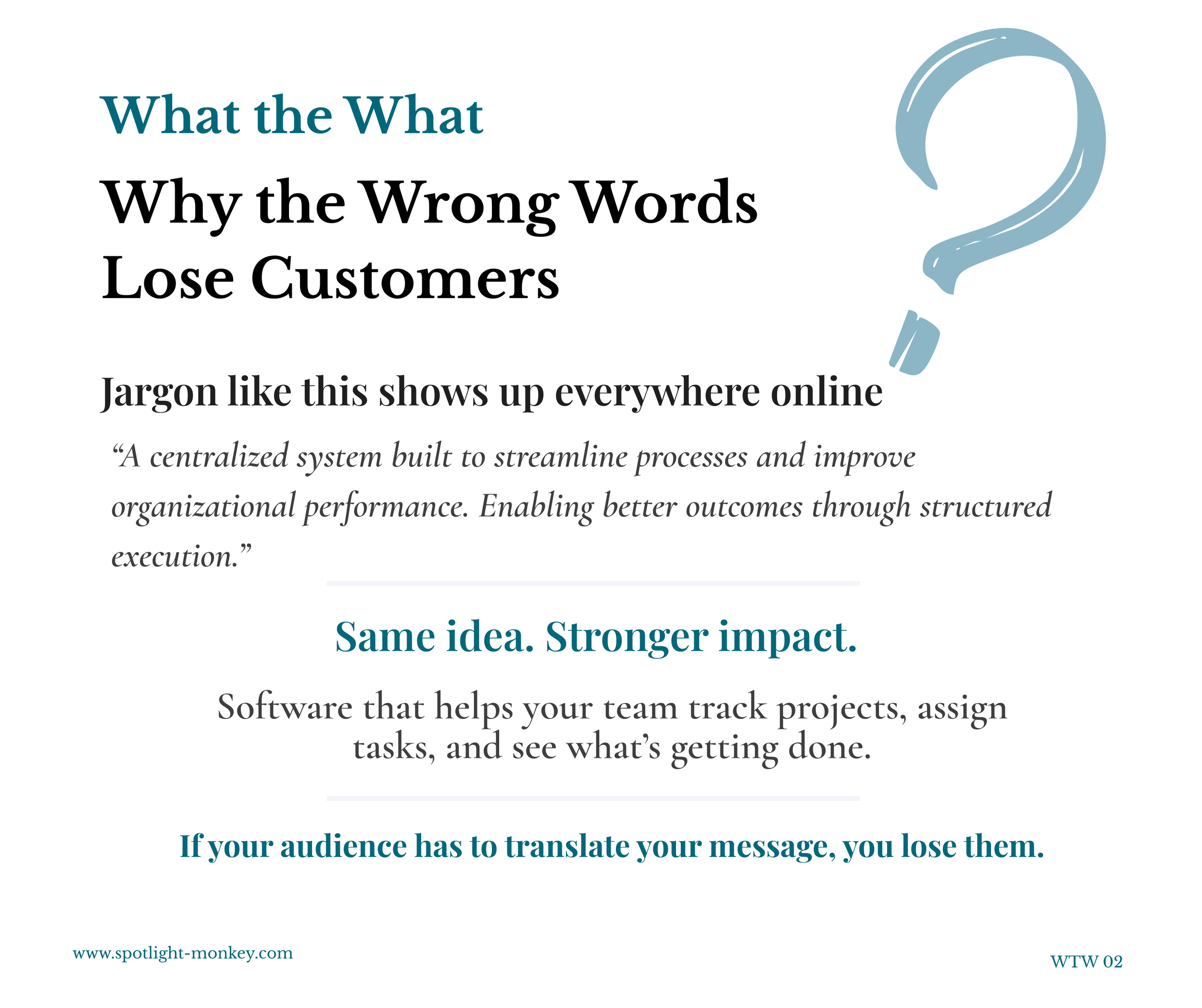
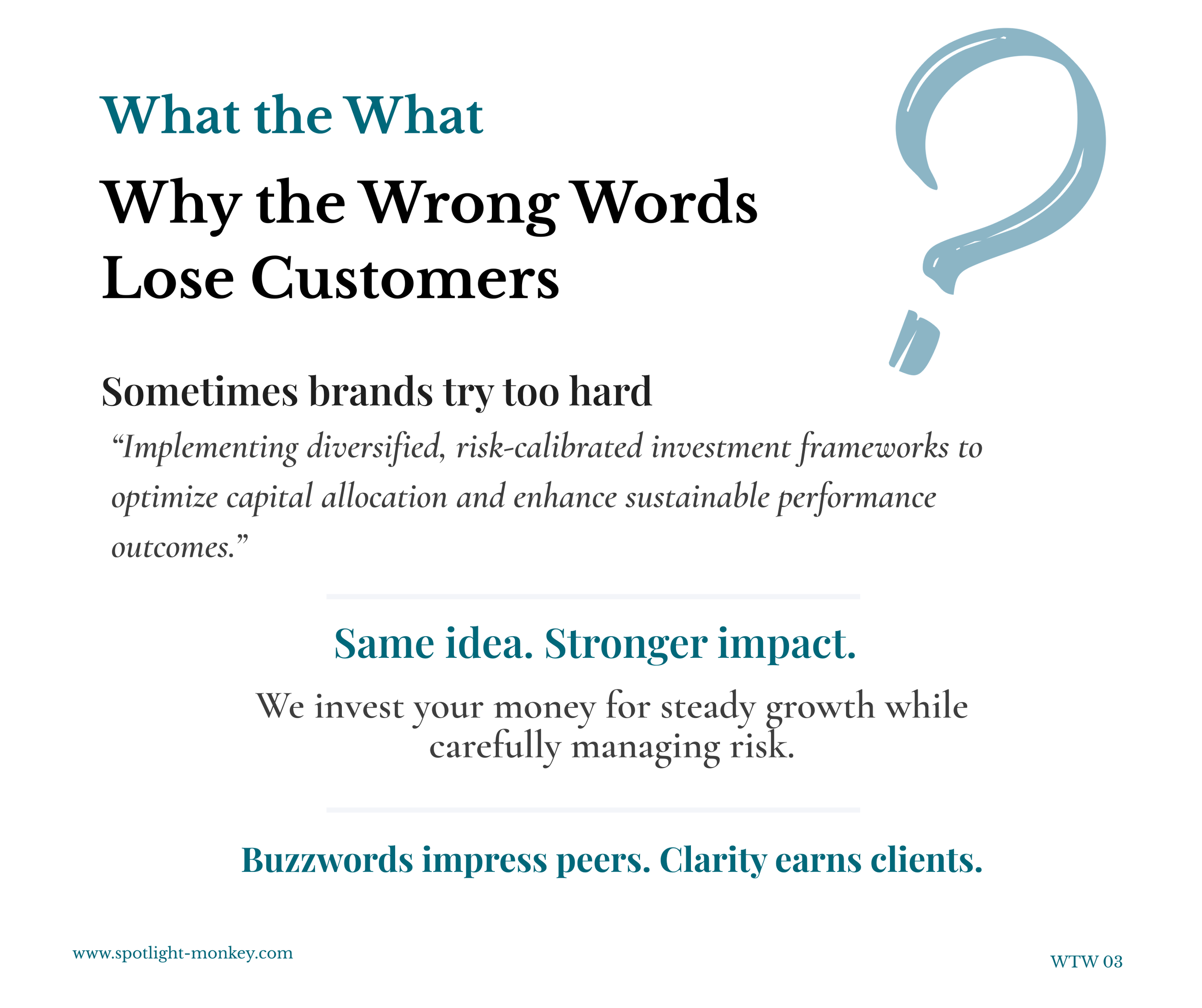
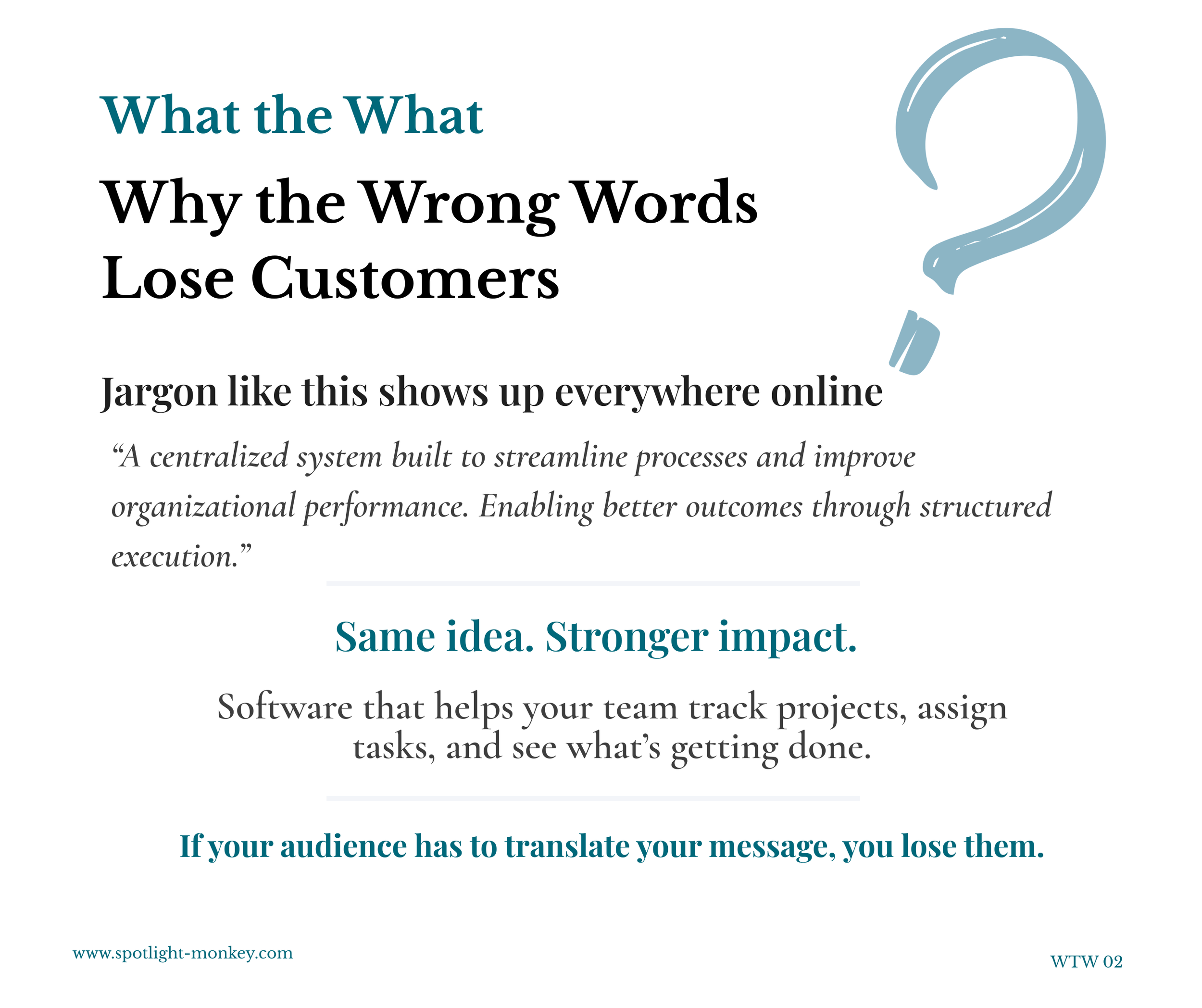
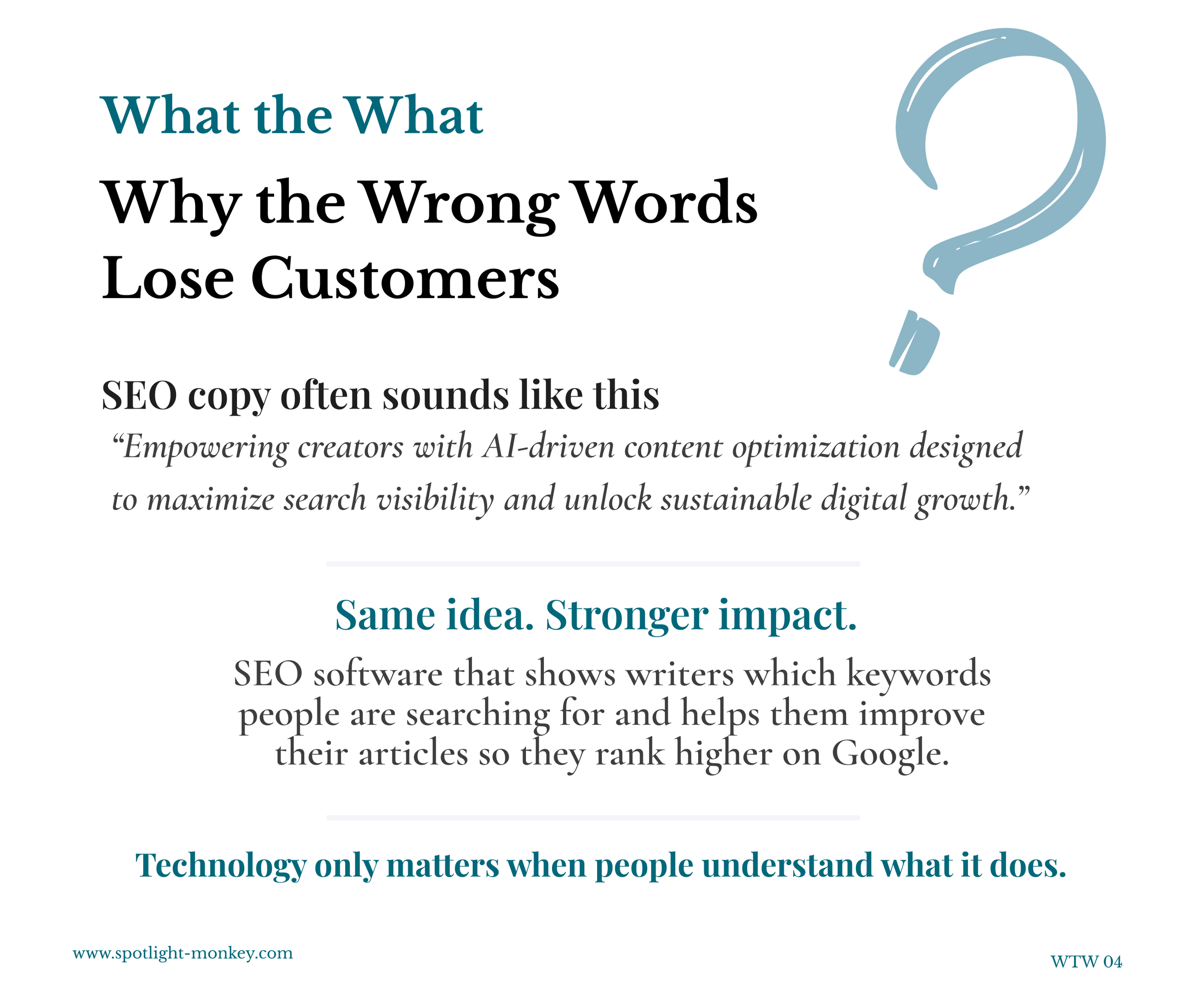
Below are examples from Spotlight Monkey’s WTW series which takes common alienating business language and turns it into messaging that humans can understand. Each example shows how a brand’s choice of words impact meaning for people.